Chapter Overview
Minimal-aggression surgery is often misunderstood as a cosmetic or technical concept—smaller incisions, less blood loss, faster closure. While these features may be present, they do not capture the true objective.
From a DBI perspective, aggression is not defined by incision length or operative time. Aggression is defined by how much disruptive information a surgical act delivers to a biological system already under stress.
A technically elegant operation can still be biologically violent. Conversely, a larger operation performed with restraint, pacing, and signal awareness may be biologically quiet.
This chapter reframes minimal-aggression technique as the discipline of reducing unnecessary biological signal across mechanical, immune, neural, metabolic, and informational domains—particularly during Preventative and early Curative PCR phases. It establishes minimal aggression as a teachable, repeatable, and measurable surgical skill, not an aesthetic preference.
Learning Objectives
By the end of this chapter, the learner will be able to:
- Define surgical aggression in DBI terms
- Identify sources of unnecessary biological signal during surgery
- Apply minimal-aggression principles across operative domains
- Distinguish “technically minimal” from “biologically minimal” surgery
- Recognize disease-origin risks of high-noise operative technique
- Integrate minimal-aggression technique into staged surgical strategy
12.1 Redefining Surgical Aggression
12.1.1 Aggression as Signal Load
In classical training, aggression is associated with overt trauma: excessive dissection, large incisions, prolonged operations. DBI expands this definition.
Surgical aggression = the total disruptive signal delivered per unit time.
This includes:
- Mechanical tissue distortion
- Ischemia and reperfusion events
- Thermal injury from cautery
- Immune activation
- Neural threat encoding
- Metabolic demand
Aggression is therefore cumulative and multidimensional, not binary.
12.1.2 Why the Body Cares About “Noise”
Biological systems evolved to interpret signals. When signal density exceeds interpretive capacity, the system simplifies defensively:
- Inflammation becomes generalized
- Pain thresholds drop
- Fibrosis replaces regeneration
- Neural circuits favor vigilance
Minimal-aggression technique exists to prevent this defensive simplification.
12.2 Sources of Unnecessary Surgical Signal
Minimal aggression begins with recognizing where excess signal originates.
12.2.1 Mechanical Noise
- Excessive retraction
- Prolonged tissue tension
- Repeated repositioning
- Rough handling of fascia and nerves
These distort mechanotransduction and amplify nociceptive input.
12.2.2 Thermal Noise
- Indiscriminate cautery
- High-energy coagulation
- Thermal spread into surrounding tissue
Thermal injury generates inflammatory signals far beyond the visible burn zone.
12.2.3 Temporal Noise
- Prolonged operative time
- Unnecessary pauses with open cavities
- Repeated entry into the same planes
Time under stress matters as much as intensity.
12.2.4 Cognitive and Environmental Noise
- Chaotic operative flow
- Frequent plan changes
- Loud environments
- Poor team coordination
The nervous system interprets chaos itself as threat.
12.3 Minimal-Aggression Technique Across PCR Phases
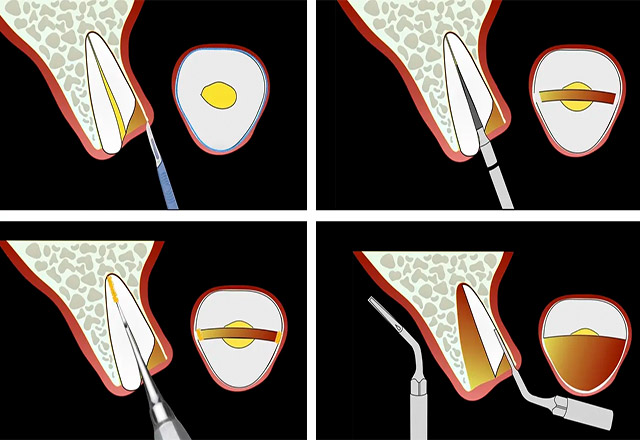
12.3.1 Preventative Phase: Signal Reduction Is the Priority
In the Preventative phase, the system is operating with minimal bandwidth.
Minimal-aggression priorities include:
- Short operative duration
- Limited tissue exposure
- Containment rather than correction
- Gentle handling
- Avoidance of “cleanup” behaviors
Here, doing less is often the most skilled action.
12.3.2 Curative Phase: Precision Without Escalation
In the Curative phase, precision becomes possible—but escalation remains dangerous.
Minimal-aggression technique means:
- Direct, purposeful dissection
- Respect for natural tissue planes
- Avoidance of unnecessary widening
- Selective rather than routine cautery
Curative surgery should feel quiet and deliberate, not heroic.
12.3.3 Restorative Phase: Reinforcing Safety
During restoration, surgical interventions (including re-operations or closures) should communicate:
- Stability
- Predictability
- Low threat
Even minor procedures can reset the system into threat mode if performed aggressively during this phase.
12.4 Technique as Biological Communication
12.4.1 Tissue Planes as Language
Tissue planes are not merely anatomical conveniences; they are communication pathways.
Staying within natural planes:
- Preserves vascular and neural signaling
- Reduces inflammatory spread
- Maintains ECM memory
Forcing planes introduces linguistic confusion into the biological system.
12.4.2 Retraction, Exposure, and Respect
Exposure is necessary, but prolonged maximal exposure is biologically expensive.
Minimal-aggression strategies include:
- Intermittent relaxation of retractors
- Dynamic rather than fixed tension
- Exposure only where work is occurring
This reduces continuous nociceptive and ischemic signaling.
12.5 Disease-Origin Assessment: Aggression Errors
12.5.1 How Excess Aggression Becomes Chronic Disease
High-noise surgery increases the risk of:
- Chronic inflammation
- Fibrosis and stiffness
- Central pain sensitization
- Poor functional recovery
These outcomes are not technical failures. They are interpretive failures.
12.5.2 Disease-Origin Summary Table
Aggression Source | DBI Consequence | Long-Term Outcome |
Excessive cautery | Immune overactivation | Fibrosis |
Prolonged tension | Mechanotransduction distortion | Chronic pain |
Long operative time | Metabolic depletion | Delayed recovery |
Chaotic flow | Neural threat encoding | Autonomic dysfunction |
12.6 Minimal Aggression as a Trainable Skill
Minimal-aggression technique is not innate. It is trained intentionally.
Key training elements include:
- Awareness of tissue response
- Economy of motion
- Planned operative choreography
- Team communication discipline
- Willingness to stop early
Simulation, video review, and mentorship are essential to developing this skill.
12.7 Teaching Implications for Surgical Interns
Interns often equate effort with excellence. DBI reframes excellence as clarity and restraint.
Interns should be taught to ask:
- Is this action necessary right now?
- Does this reduce or increase signal load?
- What is the body learning from this movement?
Early adoption of minimal-aggression technique prevents decades of iatrogenic disease.
12.8 Chapter Summary
- Surgical aggression is defined by signal load, not incision size
- Excess noise drives defensive biological learning
- Minimal-aggression technique preserves intelligence
- PCR phase awareness guides acceptable aggression
- Technique is biological communication
- Quiet surgery heals better
Key Takeaway Statement
The best surgeons are not the ones who do the most.They are the ones whose hands disturb the system the least.